


A Special Feature Report by IMGW News
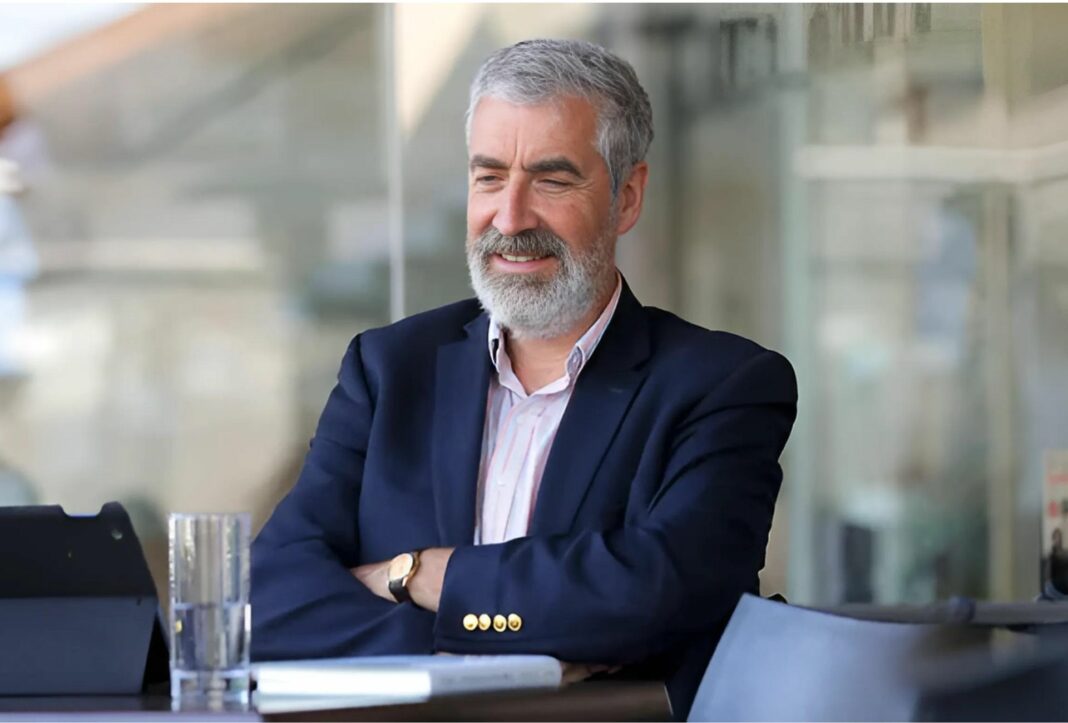
We are bringing a synopsis of Mobility of the Wealthy and Talent: A Global Perspective to IMGW News readers, confident that it will be highly interesting and relevant to their business. This paper, authored by Andrés Solimano, FIMC, Chairperson of the Investment Migration Council and expert in international economics, wealth distribution, migration, and inequality, was presented at the Workshop on The International Mobility of the Wealthy and Talent at Fudan Institute, Shanghai, on 28-29 September 2024. This article synthesises the paper’s key insights on the global migration of wealth and talent.
“The wealthiest 1% now hold 45-50% of the world’s total personal wealth, while approximately 40% of adults possess less than $10,000 in assets, controlling only 0.5% of global wealth. This extreme inequality has socio-political implications, including instability and insecurity.”

The global economy has generated in recent decades significant wealth, particularly through technological innovation in sectors such as IT, real estate, and finance. Despite this, wealth distribution remains strikingly uneven. The wealthiest 1% now hold 45-50% of the world’s total personal wealth, while approximately 40% of adults possess less than $10,000 in assets, controlling only 0.5% of global wealth. This extreme inequality has socio-political implications, including instability and insecurity.
High-net-worth individuals (HNWIs), those with more than $1 million in net assets, are highly mobile. The pursuit of personal and financial security, political stability, tax advantages, and quality education for their children are major drivers of their mobility. The top destinations for HNWIs in 2024 are projected to be the United Arab Emirates (UAE), the United States, and Singapore, which offer favourable investment conditions, capital-friendly tax structures, and, with caveats, political stability. Meanwhile, countries such as China, India, and the UK are witnessing significant outflows of HNWIs due to economic and political uncertainties. In 2023, 1.5% of the global adult population, or 58 million people, were millionaires, collectively holding 47.5% of the world’s wealth.
Governments use programmes such as Residence by Investment (RBI) and Citizenship by Investment (CBI) to attract both wealthy individuals and also younger and enterprising investors. These programmes allow individuals to obtain residency or citizenship in exchange for investments in real estate, government bonds, or local businesses. The growth of such initiatives has created a “global market of nationalities”, with nations competing for investors who bring fresh capital and market connections.
Simultaneously, the international mobility of talent is on the rise. Highly skilled and educated individuals, including scientists, academics, and entrepreneurs, seek opportunities in countries offering better resources, advanced industries, and cosmopolitan environments. Talent mobility is particularly concentrated in high-income nations such as the US, Western Europe, and China, with approximately 35 million highly skilled migrants globally. However, this is not limited to traditional industries—digital nomads, who use their digital skills to work remotely, are an emerging class of mobile professionals working in countries offering favourable living conditions.
While wealthy individuals and talented professionals share motivations such as better opportunities and stability, their impacts differ. HNWIs contribute financially, while talent drives knowledge creation, innovation, and cultural exchange. However, these movements also present challenges, such as increasing inequality and the “brain drain” from developing countries. Balancing the benefits of mobility with equitable policies remains a complex global issue.
Prepared for the Workshop on The International Mobility of the Wealthy and Talent, held at the Fudan Institute of Advanced Study in Social Sciences, Shanghai, on 28-29 September 2024, this paper by Andrés Solimano delves into the forces driving the global migration of wealth and talent. Solimano explores how High-Net-Worth Individuals (HNWIs) and skilled professionals are increasingly crossing borders, attracted by financial security, favourable policies, and better opportunities. His analysis offers key insights into the implications of this mobility, from the concentration of wealth in global hubs to the challenges posed by growing inequality and the “brain drain” affecting developing nations.
You can download the paper here: Link.
The Author

Andrés Solimano, FIMC, is Chairperson of the Investment Migration Council in Switzerland and a leading expert on international economics, wealth distribution, migration, and inequality. He holds a PhD in Economics from the Massachusetts Institute of Technology (MIT). Solimano is the founder and Chairman of the International Center for Globalization and Development (CIGLOB). He has held distinguished roles, including Country Director at the World Bank, Executive Director at the Inter-American Development Bank, and Director of the project on International Mobility of Talent with the United Nations University – World Institute of Economic Research.
Solimano’s work focuses on the global forces shaping wealth accumulation, elite migration, and economic inequality. His recent publications include Reading John Maynard Keynes. A Short Introduction, (Routledge, 2024); Economic and Political Democracy in Complex Times, Routledge, 2022); A History of Big Recessions in the Long Twentieth Century, Cambridge University, 2020; Global Capitalism in Disarray: Inequality, Debt and Austerity (Oxford University Press, 2017), Economic Elites, Crises and Democracy (Oxford University Press, 2014), and International Migration in the Age of Crisis and Globalization (Cambridge University Press, 2010). He also edited The International Mobility of Talent: Types, Causes, and Development Impact (2008). Through his leadership and research, Solimano advises governments and organizations on global development trends, policies to manage wealth mobility, and strategies for reducing inequality and fostering sustainable growth.

