


An IMGW News Report:
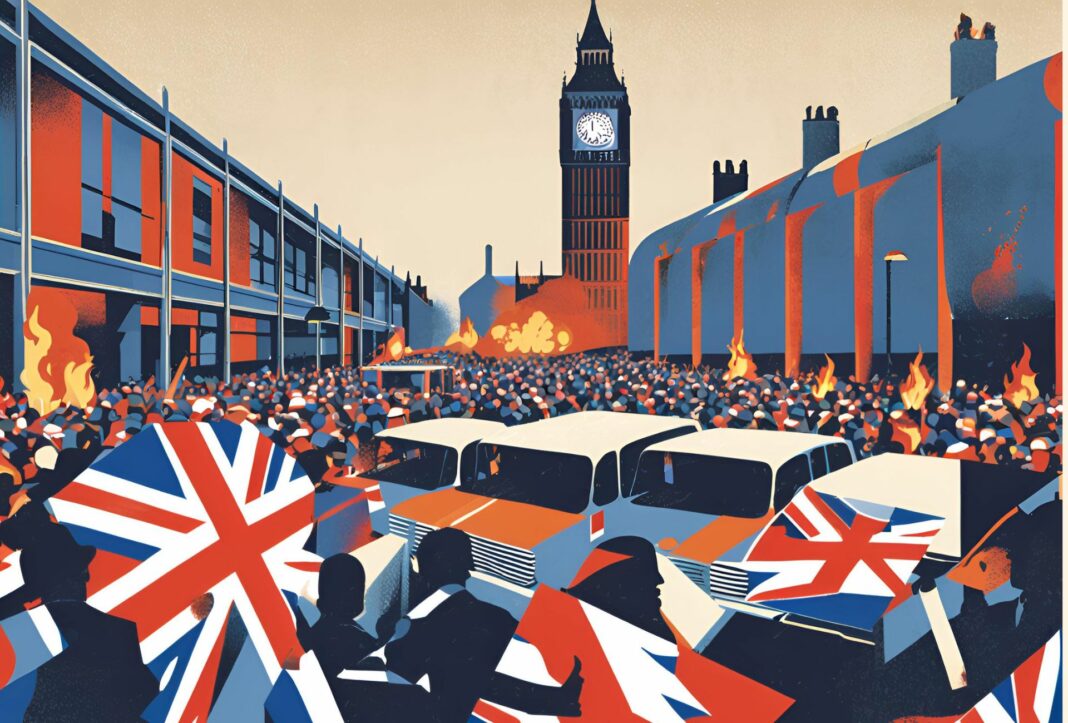
In recent weeks, the UK has been gripped by a wave of violence and unrest, ostensibly ignited by the tragic attack in Southport, Merseyside, on the 29th of July. What started as isolated incidents has quickly spiralled into a broader national crisis, driven by misinformation, xenophobia, and far-right activism. Among the many victims of this unrest are immigration lawyers, who now find themselves on the front lines, targeted by those looking to stoke division and hatred.
“On Monday I started getting the messages: ‘You’re on a hitlist.’ I’m a migrant. I’ve come here and tried to integrate; I’ve built my business and raised my family. People have been calling up my office to threaten and insult me. I’m just trying to do my job.”
The Escalation of Threats

Immigration lawyers have always been vulnerable to public criticism, often seen as controversial figures due to the nature of their work. However, the recent surge in hostility has taken this to an alarming new level. Following the Southport attack, a list of immigration offices was circulated on the Telegram messaging app, accompanied by calls for action under the banner of “no more immigration.” The list has since spread across other social media platforms, reaching thousands of individuals, some of whom have used it as a blueprint for targeting specific offices and individuals.
The message is clear: these lawyers are being singled out, not just as scapegoats for broader social issues, but as enemies of the state. The fear among immigration lawyers is palpable. Many have been advised by the police to work from home, board up their office windows, and install fireproof letterboxes – a stark reminder of the dangerous climate in which they now operate.
The Human Toll
For many of these lawyers, the threat is not just to their professional lives, but to their personal safety. One immigration lawyer, who wished to remain anonymous, recounted to the BBC the moment she realised the gravity of the situation: “On Monday I started getting the messages: ‘You’re on a hitlist.’ I’m a migrant. I’ve come here and tried to integrate; I’ve built my business and raised my family. People have been calling up my office to threaten and insult me. I’m just trying to do my job.”
This sentiment is echoed by many in the profession, who feel that they are being unfairly targeted for simply doing their jobs – jobs that often involve defending the most vulnerable in society. Another lawyer described the surreal nature of the situation, noting that they don’t even cover asylum cases, yet have been swept up in the maelstrom of anger directed at anyone associated with immigration.
The physical and psychological toll on these professionals cannot be understated. Many have had to close their offices, remove staff details from their websites, and cancel face-to-face appointments with clients. The sense of fear is compounded by the knowledge that the list circulating online includes not just the names of firms, but also their addresses, making the threat all the more real.
The Role of Social Media and Far-Right Extremism

The dissemination of the hitlist on social media, particularly on platforms like Telegram, underscores the role that online spaces play in modern extremism. Telegram, known for its lenient moderation policies, has become a breeding ground for far-right rhetoric, misinformation, and incitement to violence. The platform’s “hands-off” approach to disinformation and extremism has allowed hate groups to flourish, organising protests, and spreading false narratives that fuel public disorder.
Henry Parker, from the fact-checking organisation Logically, noted that the government is struggling to keep up with the pace of misinformation. The Online Safety Act, which could provide tools to curb the spread of such dangerous content, has yet to be fully implemented, leaving a gap that extremists are exploiting to further their agendas.
The Response from Authorities

In the face of these mounting threats, the response from law enforcement has been swift but challenging. Police forces across the UK have mobilised nearly 6,000 public order officers to respond to the ongoing disorder, with at least 30 potential gatherings planned in the coming days. The Metropolitan Police has made it clear that it will use every power and tactic at its disposal to prevent further scenes of violence.
Government officials have also expressed their concern. Jim McMahon, Minister for Housing, Communities, and Local Government, emphasised the seriousness of the situation, noting that the list circulating online represents a “very credible threat” to the safety of immigration lawyers. He reassured the public that the authorities are prepared to respond with the full force of the law against anyone who crosses the line from protest to violence.
A Call for Solidarity and Support
The Law Society of England and Wales has been vocal in its support for immigration lawyers during this difficult time. President Nick Emmerson has highlighted the real-world consequences of anti-lawyer rhetoric, which has now escalated into tangible threats against those working tirelessly to uphold justice. He praised the police for their support but acknowledged the limitations of the advice to “not go to work and don’t meet clients.” For many, this is simply not a sustainable solution.
As the situation continues to unfold, there is an urgent need for solidarity with those who have been unjustly targeted. Immigration lawyers are not the enemy; they are professionals dedicated to defending the rights of individuals who often have nowhere else to turn. The recent unrest has revealed deep-seated anger and division within the UK, but it is crucial that these tensions do not spill over into violence against those who are merely doing their jobs.
In these trying times, the safety and wellbeing of immigration lawyers must be a priority. They need the support of the public, the government, and their peers to continue their essential work without fear of retribution. As the country grapples with the fallout from these riots, let us not forget the individuals who stand at the intersection of law, justice, and human rights, often at great personal risk.

