


An IMGlobalWealth.news Report
Residency Malta’s new chief executive wants the agency’s next phase to focus on quality, talent and substance, while forging stronger connections between international residents and the country they choose to call home.
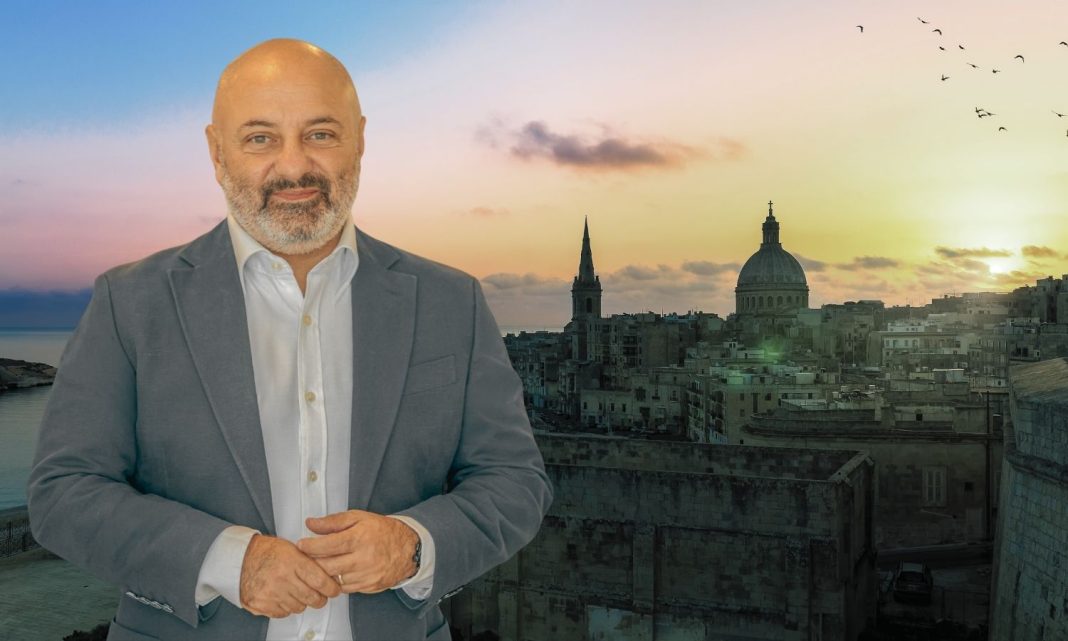
Kurt Farrugia takes the helm of Residency Malta at a time when international mobility is becoming more complex and, for many families, more strategic.
The agency he inherits has already been broadening its remit, connecting residency more closely with family offices, entrepreneurship and digital nomadism. Farrugia now wants to build on that foundation by positioning residency within a wider national effort to attract talent, business and expertise.
Having previously headed Malta Enterprise and Transport Malta, Farrugia brings experience spanning investment promotion, regulation and public administration. His central argument is straightforward: Malta should compete on quality rather than scale, while ensuring that residency develops into something meaningful, beyond the initial transaction.
“One of Malta’s strengths is predictability. Our programme has evolved without constant dramatic changes, and applicants value knowing that the goalposts will not suddenly move. Add to that an English-speaking environment, political and economic stability, connectivity, business opportunities and the advantages of a smaller jurisdiction, and we have a strong proposition”

The Interview
In this interview with IMGW.news Editor-in-Chief Ray de Bono, Farrugia sets out how he sees that next phase taking shape.
Question 1 | You take the helm at a time when global mobility is changing considerably. What is your overarching vision for Residency Malta?
I think we need to start by understanding why people are looking at residency options in the first place. People don’t simply wake up one morning and decide to move countries. Very often, they are planning for a future that may be ten or twenty years away. They want options for themselves and, perhaps more importantly, for their children.
We recently met a family from South Korea whose son wants to establish a company in Malta. They are proud of where they come from. Malta is not about replacing that home. It is about opening another door for their son and giving the family more choices. I find those conversations fascinating because they tell us much more than any application form can.
My vision is for Residency Malta to build on those relationships. We can offer a safe, stable, English-speaking European jurisdiction, a Mediterranean lifestyle and genuine business opportunities. But Malta is a small country, and we must be selective about the value we want to create. For me, quality must come before volume, and strong due diligence is non-negotiable.

Question 2 | Do you increasingly see residency as part of a wider national strategy for attracting talent and enterprise?
Absolutely. A country’s competitiveness depends on the people it can attract. Investment is important, but the skills, ideas and networks that people bring can have an impact well beyond the initial investment.
The conversation around migration is changing. It is not only about how much someone is worth or how much they can invest. It is also about what they can build, the knowledge they can share and the opportunities they can create. We have educators, people working in AI, medical technology and other sectors who can contribute not simply by having residence in Malta, but through their expertise and engagement..
In an increasingly global world, talented people have choices. Our challenge is to give them good reasons to choose Malta, and to stay connected with us once they do.
Question 3 | So you want the relationship with residents to extend beyond the application process itself?
Yes, and I feel quite strongly about this. A residence permit should be the beginning of a relationship, not the end of a transaction.
In my meetings with applicants and residents from US, Canada, South Korea, Nigeria, China and elsewhere, I have been struck by how many want to talk about what they can do here, not just what the programme can do for them. Some have business ideas. Others have expertise, contacts or an interest in contributing to the community. We need to listen to those ambitions.
That human connection matters. We should not treat people as application numbers, and we should not measure our work only by permits issued. I want us to understand the people choosing Malta and explore what those relationships can mean for them and for our country.
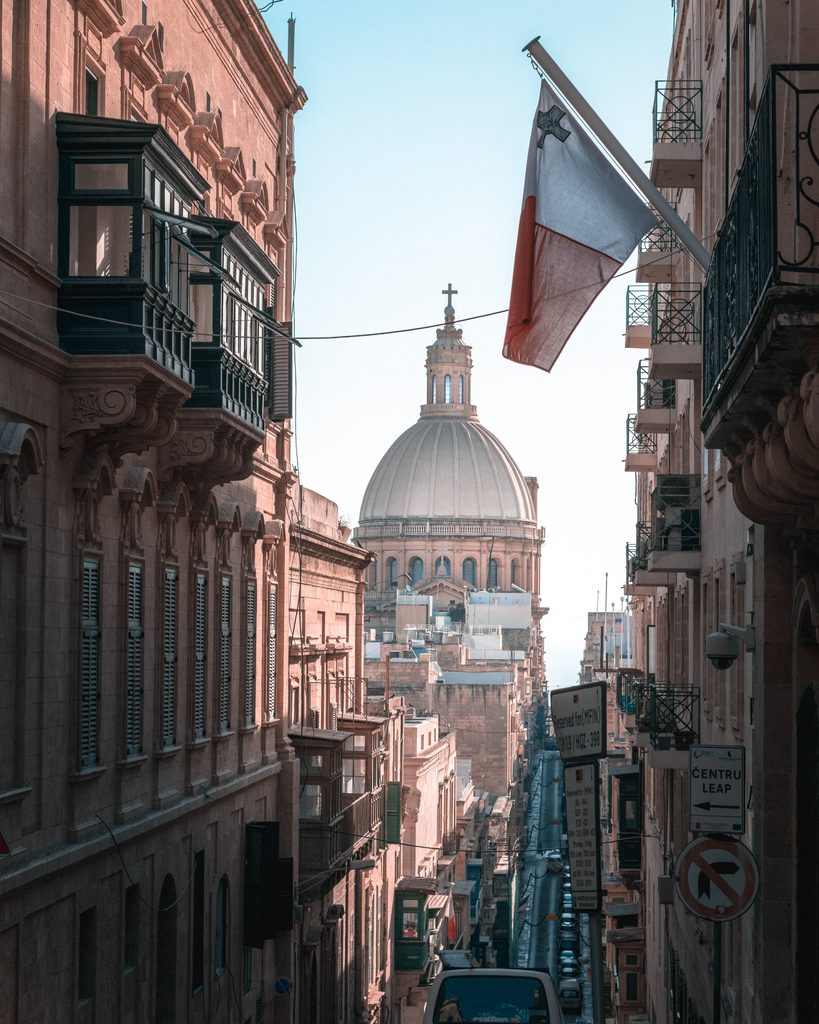
Question 4 | For someone in the United States or Asia, Malta may be known principally as a small Mediterranean EU state. Yet behind its size is a much broader proposition: financial services, gaming, pharmaceuticals and life sciences, technology, start-ups, real estate, culture and a film industry that has hosted major international productions. Is Malta doing enough to communicate the breadth of that offering?
I think we sometimes make the mistake of starting the conversation with the residence programme. We should start with Malta. Residency is one part of a much bigger story.
When I speak to families abroad, the questions are often very practical. Will our children feel comfortable? Is it safe? Can we run a business from there? Will we enjoy living there? Our history, culture, language, connectivity and quality of life all matter. And Malta has an economy that reaches well beyond what people might expect from an island of our size.
That is why I want us working closely with Malta Enterprise, the venture-capital ecosystem, FinanceMalta, GamingMalta and other partners. If someone is considering setting up a business, building a family office or entering a new market, we should be able to have a joined-up conversation about Malta, rather than hand them a brochure about residency and stop there. Being small and nimble should help us do that well.
“My vision is for Residency Malta to build on those relationships. We can offer a safe, stable, English-speaking European jurisdiction, a Mediterranean lifestyle and genuine business opportunities”

Question 5 | The family-office sector appears to fit particularly well within that strategy. How important could it become?
I see real potential, provided we focus on substance. Families managing significant wealth are not only asking where to hold assets. They are thinking about continuity, succession, governance and where the next generation might want to live and work.
We are working with the MFSA on the residency dimension for qualifying family-office structures. To be clear: the objective is not to attract a company name on a letterhead. We want genuine activity, professionals, decision-making and connections to Malta, within a sound regulatory framework.
We see opportunities to develop these conversations in markets such as the United States, India, Turkey and China. Our business-development work is helping us understand where there is genuine demand. Malta’s advantage is that we can bring the right institutions around the table and respond to opportunities without losing sight of standards.
FACT FILE | MALTA
A Broader Proposition than its Size Suggests


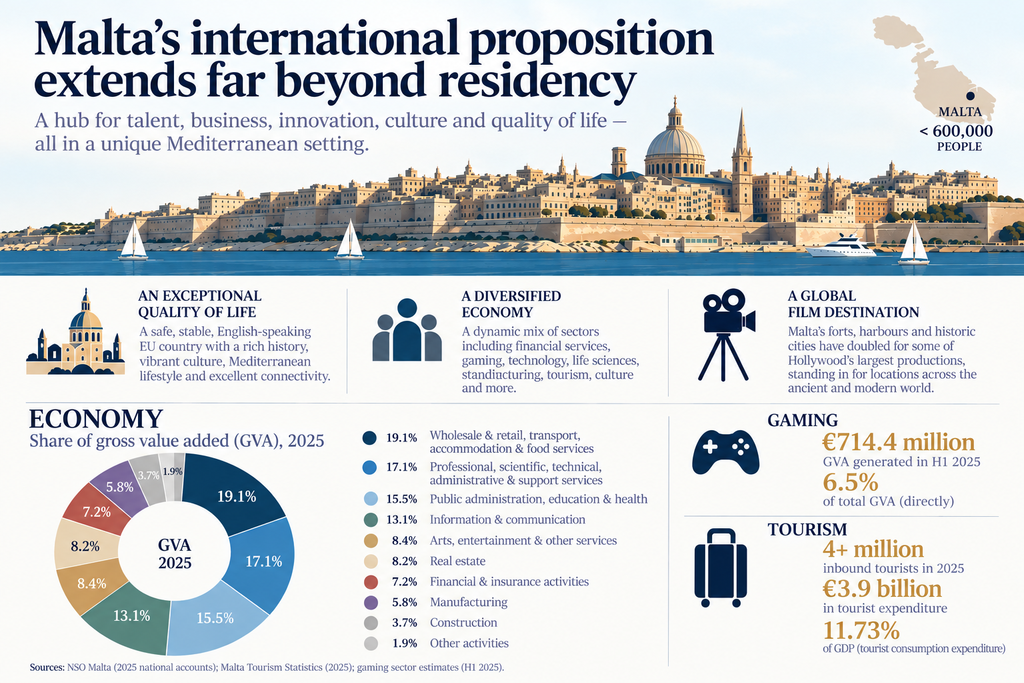
Malta’s international proposition extends considerably beyond residency. Few first-time visitors might associate an island of fewer than 600,000 people with some of Hollywood’s largest productions, yet its forts, harbours and historic cities have doubled for locations across the ancient and modern world.
The economy is similarly more diversified than Malta’s size might suggest. Based on full-year 2025 national-accounts data, wholesale and retail, transport, accommodation and food services accounted for around 19.1% of gross value added (GVA); professional, scientific, technical, administrative and support services for 17.1%; public administration, education and health for 15.5%; information and communication for 13.1%; arts, entertainment and other services for 8.4%; real estate for 8.2%; financial and insurance activities for 7.2%; manufacturing for 5.8%; and construction for 3.7%.
Gaming, which cuts across the wider service economy, generated an estimated €714.4 million in GVA during the first half of 2025, equivalent to 6.5% of Malta’s total GVA directly.
Tourism remains another major pillar. Malta received just over four million inbound tourists in 2025, generating €3.9 billion in expenditure. Tourist consumption expenditure was equivalent to 11.73% of GDP, although the NSO notes that this is a broad expenditure measure rather than tourism’s direct value-added contribution.

More recent indicators underline the continued expansion of higher-value services. In the second quarter of 2026, GVA in information and communication grew by 9.2% year on year in volume terms, financial and insurance activities by 12.2%, and professional, scientific and technical activities by 7.5%. Pharmaceuticals remain embedded within Malta’s manufacturing base rather than reported as a separate headline GVA sector; output of chemical and pharmaceutical products was 10.1% higher year on year in May 2026.
Question 6 | Residency Malta has also worked to build a stronger relationship with the digital-nomad community. Can that philosophy be extended?
I think the Nomad community gives us a very good example of what meaningful engagement can look like. At events we have organised, I have spoken to people who initially came to Malta simply because they could work from anywhere. Then they discovered the people, the lifestyle and the connections here.
Some told us they were considering setting up businesses. Others spoke about the communities they had become part of. That is important. A person may arrive with a temporary plan, but their relationship with Malta can develop in ways neither they nor we anticipated.
Through networking events and initiatives such as the Heritage Card, we are helping people get to know each other and the country better. I would like us to bring more of that approach to our other residence pathways. We should remain interested in people after their permits are issued.
Question 7 | Your previous roles combined investment promotion at Malta Enterprise with regulation at Transport Malta. What does that experience bring to Residency Malta?
My time at Malta Enterprise taught me how important it is to be ambitious about attracting investment and talent. At Transport Malta, the regulatory responsibility was equally clear. I think both experiences are very relevant to Residency Malta.
When we grant residence, we are making a decision that affects Malta’s reputation and the confidence that reputable applicants place in our jurisdiction. We therefore have to be rigorous about backgrounds, sources of funds and all the checks required of us. That is not an inconvenience we should apologise for. It is part of the value of a credible programme.
At the same time, we must be professional, responsive and efficient.
Competitiveness and credibility are not competing objectives. In fact, I believe one depends on the other.
“The conversation around migration is changing. It is not only about how much someone is worth or how much they can invest. It is also about what they can build, the knowledge they can share and the opportunities they can create”


Question 8 | Where can Malta differentiate itself from competing jurisdictions?
Families and entrepreneurs have many jurisdictions to consider. What they want, increasingly, is confidence. Confidence in the rules, in the institutions and in the country where they may be planning part of their future.
One of Malta’s strengths is predictability. Our programme has evolved without constant dramatic changes, and applicants value knowing that the goalposts will not suddenly move. Add to that an English-speaking environment, political and economic stability, connectivity, business opportunities and the advantages of a smaller jurisdiction, and we have a strong proposition.
We are also making the process more efficient through digitalisation. For a complete and correct MPRP application, we are working to an expected decision timeframe of around four months, although requests for further information can affect that. But speed cannot come at the expense of due diligence. We should compete on the quality of both our decisions and our service.

9) Looking ahead, what would you regard as the strongest measure of success for Residency Malta?
I would not want to judge our success simply by the number of permits we issue or the financial contribution attached to each application. Those figures matter, but they do not tell the whole story.
I would want to know whether a family found the security and choices it was looking for, whether a founder built a business here, whether a nomad developed lasting connections, or whether a family office created genuine activity and opportunities in Malta. Those are the outcomes that give residency a wider purpose.
This also requires government agencies and economic sectors to work together, with a clear understanding of the talent and investment Malta wants to attract. Ultimately, success means building relationships that create value for the people who choose Malta and for the country itself. Quality comes first, and confidence has to be earned every day.
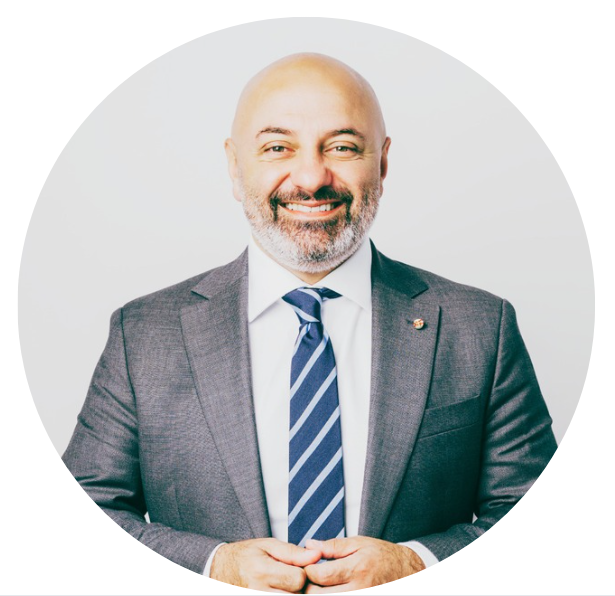
Biography
Kurt Farrugia is Chief Executive Officer of Residency Malta, the government agency responsible for administering Malta’s residency-by-investment and temporary residence programmes, including the Malta Permanent Residence Programme (MPRP), the Nomad Residence Permit, the Malta Startup Residence Programme and residency for family office structures. With an accomplished career spanning public administration, strategic communications and executive leadership, Kurt brings extensive experience in governance, stakeholder engagement and organisational transformation across the public sector.
Throughout his career, he has held a number of senior leadership positions, leading multidisciplinary teams and driving initiatives that have strengthened institutional performance, enhanced public service delivery and fostered collaboration between the public and private sectors. He has served as Head of Government Communications and spokesperson to the Prime Minister, Chief Executive Officer of Malta Enterprise, where he led the agency to major investments, building the start-ups ecosystem as well as assisting local businesses through various initiatives, and most recently Chief Executive Officer of Transport Malta. As CEO of Residency Malta, Kurt is focused on building on the Agency’s strong foundations while steering it towards its next phase of growth and excellence.

𝑰𝒏𝒕𝒆𝒓𝒆𝒔𝒕𝒆𝒅 𝒊𝒏 𝑭𝒆𝒂𝒕𝒖𝒓𝒊𝒏𝒈 𝒀𝒐𝒖𝒓 𝑩𝒖𝒔𝒊𝒏𝒆𝒔𝒔 𝒐𝒏 𝒐𝒖𝒓 𝑪𝒐𝒎𝒑𝒂𝒏𝒚 𝑺𝒑𝒐𝒕𝒍𝒊𝒈𝒉𝒕 𝑷𝒂𝒈𝒆𝒔?
If you’d like to have your company highlighted in our weekly spotlight, please do not hesitate to contact IMGW.News. Reach out to us via email at [email protected] or call us at 0035699490209. We look forward to showcasing your business and sharing your unique story with our audience.
While IMGW.News reviews content provided by its advertisers and contributors, we are not responsible for the accuracy of third-party links or business information featured in sponsored or promotional content, such as the above.

