


An IMGW News Report
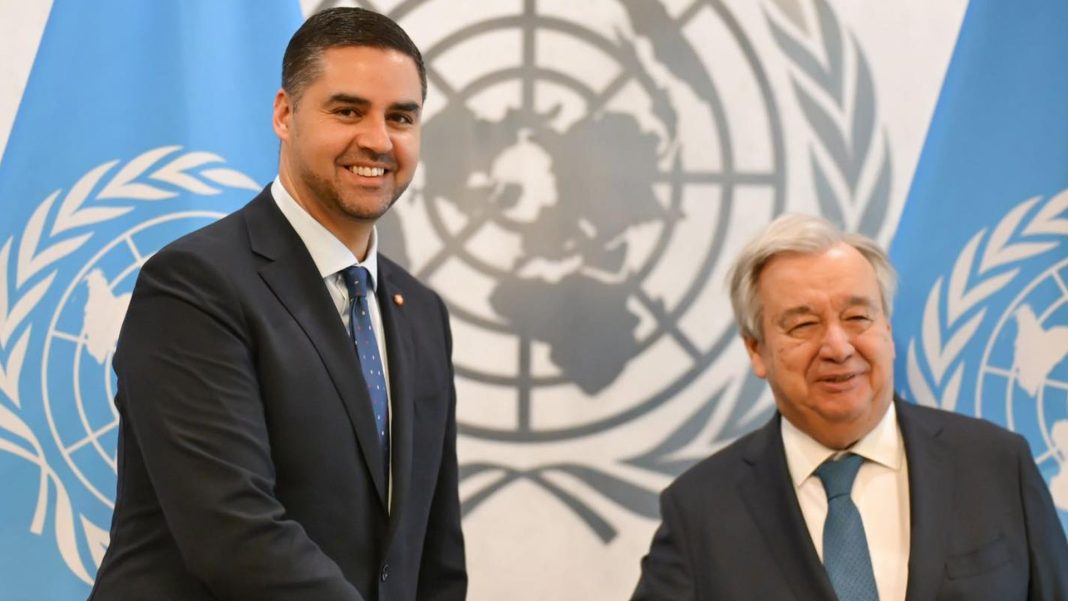
Malta, 23rd January 2025 | Malta’s story is one of resilience, vision, and ambition, showing that even the smallest island nations can make a significant impact on the global stage. In this exclusive interview with Deputy Prime Minister and Foreign Affairs Minister, Dr Ian Borg, IMGW News Editor-in-Chief Ray de Bono explores how Malta has become a model for small island states worldwide. With a dynamic, diversified economy and a much-sought-after Investment Migration programme, Malta stands as a testament to how nations can thrive and lead by example in a rapidly changing world.
Malta’s Role as a Diplomatic Leader
Question 1: Malta has demonstrated remarkable leadership within the EU, OSCE, and the UN Security Council despite its small geographical size. How has the country leveraged its soft power to shape international diplomacy and promote its interests on the global stage? What key lessons can other small nations, particularly island states in the Pacific and Caribbean regions, draw from Malta’s approach to international relations and global influence?
Dr Ian Borg: “Malta’s strategic engagement within the EU framework demonstrates how small nations can leverage regional alliances to amplify their global impact. Our efforts in recent years have focused on multilateral efforts at the UNSC and OSCE. At the UNSC, we have striven to promote peaceful solutions to ongoing conflicts in accordance with international law and to keep attention focused on the need to protect civilians, whether they are in Sudan, Ukraine, the Middle East, or elsewhere. Throughout its OSCE Chairpersonship, Malta managed to gain the trust and reputation of being a principled Chair, which remained open for dialogue, even with the most challenging countries. This was a particularly important factor when considering the context of Russia’s war against Ukraine and other conflicts in the European region, which played a dominant role in the conduct of the organisation.
Ultimately, our relentless commitment to dialogue, respect, and international law consolidated our reputation as a reliable agent of peace, with no hidden agenda. This determination helped us win the trust of many countries at different multilateral negotiating tables. We will maintain this effort to strengthen our international standing in our upcoming commitments as well, including the Maltese Presidency of the Council of Europe in May and my roles as chair of the Commonwealth Ministerial Action Group and the OSCE Asian Partners for Cooperation Group.”
IMGW Editorial Comment: Malta’s Deputy Prime Minister and Foreign Affairs Minister Ian Borg has been commended for his leadership of the OSCE and the presidency of the UN Security Council during critical global crises, including the ongoing wars in Ukraine and the Middle East. Despite limited resources, Malta has leveraged its human capital, invested heavily in education, and carved a global role far beyond its geographical size. The nation’s active participation in world-leading organisations—from the OSCE to the Commonwealth and the European Parliament—illustrates its influence on international affairs. Notably, Ian Borg’s recent appointment as chair of the Commonwealth Ministerial Action Group adds to Malta’s reputation for diplomatic excellence.

” Malta focuses on reinvesting proceeds from these programmes into national infrastructure, healthcare, and education, ensuring their long-term contribution to the economy. Malta continuously evaluates and refines these initiatives to ensure they remain aligned with its long-term economic vision.”

Economic and Legal Migration
Question 2: Malta has one of the highest concentrations of foreign workers in the EU, showcasing its ability to attract global talent. How does Malta’s approach to legal economic migration enhance its economic growth, and what policies ensure a balance between integration and national interests?
Dr Ian Borg: “Our approach to economic migration is rooted in a framework that balances economic needs with social integration. Legal economic migration has significantly contributed to Malta’s economic growth by tackling skill gaps and labour shortages. Policies promoting integration include language training, cultural orientation programmes, and equitable labour laws that ensure fair treatment for all workers.
Malta’s rapid growth has driven a significant demand for foreign workers, prompting the government to launch a comprehensive reform of labour migration policies through the Malta Labour Migration Policy, currently open for public consultation. To support integration, the government is strengthening measures such as mandatory pre-departure integration courses. These efforts aim to attract top talent, safeguard workers’ rights, and ensure the seamless inclusion of foreign employees into Maltese society.”
IMGW Editorial Comment: Malta’s innovative labour migration policies offer a blueprint for addressing skill gaps while ensuring social cohesion. The government’s focus on mandatory integration courses and equitable labour laws reflects a proactive approach to fostering inclusivity. Malta’s thriving economy, which has rebounded to pre-pandemic growth levels, underscores the benefits of balancing foreign talent with domestic development.
Addressing Irregular Migration
Question 3: As a frontline EU state, Malta plays a critical role in rescuing and sheltering migrants crossing the Mediterranean. Despite its limited size, Malta contributes significantly to managing this humanitarian crisis. How can Malta’s efforts serve as a model for solidarity and responsibility-sharing within the EU?
Dr Ian Borg: “Through the years, Malta has not only constantly adhered to its international obligations, including on search and rescue, but in doing so, has often ended up assuming responsibility for a disproportionate number of migrants.
In view of this, in recent years Malta has not only invested heavily in its asylum and reception capacities, but also in the areas of prevention and returns, thus ensuring that migrants who do not have a legal right to remain in the country are returned to their country of origin. These efforts have resulted in a significant decrease in the number of irregular arrivals and an increase in the number of returns.
In our experience, the internal dimension of migration management, including solidarity and responsibility-sharing, requires strengthened cooperation with third countries. Malta thus continues to support international cooperation through mutually beneficial partnerships that can address migration issues in a holistic manner.”
IMGW Editorial Comment: Despite its small size, Malta’s strategic location at the heart of the Mediterranean places it at the forefront of migration management in the EU. In 2023, the island’s refugee figures reached 11,724, reflecting a 5.64% increase from 2022. Malta’s comprehensive policies—from search-and-rescue efforts to strengthened asylum capacities—highlight its commitment to addressing this humanitarian crisis while advocating for greater EU-wide responsibility-sharing.
Investment Migration and Economic Impact
Question 4: Investment migration has been a key driver of Malta’s foreign direct investment, fostering growth in sectors like financial services and real estate. How does Malta ensure that its residency and citizenship programmes remain competitive, sustainable, and aligned with its long-term economic vision?
Dr Ian Borg: “Malta’s Investment Migration programmes have been pivotal in attracting foreign direct investment (FDI), which has strengthened sectors such as financial services and real estate. To achieve this, Malta has implemented rigorous due diligence processes to ensure the integrity of its residency and citizenship programmes, as well as the Malta Startup Residency Programme, aligning them with EU and global standards. Additionally, Malta focuses on reinvesting proceeds from these programmes into national infrastructure, healthcare, and education, ensuring their long-term contribution to the economy. Malta continuously evaluates and refines these initiatives to ensure they remain aligned with its long-term economic vision.”
IMGW Editorial Comment: Malta has demonstrated exemplary use of investment migration proceeds to bolster its economy, achieving resilience and dynamic growth within the Eurozone. With a projected economic growth rate of 4.3% for 2025—the highest in the EU—Malta continues to lead by example. Furthermore, its unemployment rate of 3.1% in Q3 2024 remains one of the lowest in Europe, highlighting its success in economic governance.

Geopolitical Challenges and Opportunities
Question 5: With the world navigating Trump’s return, Middle East tensions, and the ongoing conflict in Ukraine, how does Malta adapt its foreign policy and trade strategies to safeguard its interests? Moreover, what role does Malta envision in the evolving landscape of EU enlargement?
Dr Ian Borg: “During challenging times, Malta remains steadfast in its foreign policy, advocating for stability in the Middle East. We continue to reaffirm that the Two-State Solution is the only viable, peaceful, and just resolution that addresses the legitimate aspirations of both Israel and Palestine. Malta values its strong relationship with the United States and looks forward to continuing to work together with the USA and other partners in pursuance of the values and principles of the UN Charter.
Malta is a firm supporter of an EU enlargement process that is merit-based and rooted in firm conditionality. Our priorities should focus on fostering deeper collaboration to promote reconciliation and address outstanding bilateral issues. Malta stands ready to support our partners in undertaking the necessary quality reforms. In the context of the upcoming pre-enlargement policy reviews, Malta acknowledges the importance of addressing the EU’s capacity to act in an enlarged setting.”
The Future of Malta’s Citizenship by Investment Programme
Question 6: The European Commission’s case against Malta’s CBI Programme has drawn significant international attention. As the case approaches its conclusion at the European Court of Justice, what is Malta’s position, and how do you foresee this decision shaping the future of investment migration in Europe?
Dr Ian Borg: “Rulings of the Court of Justice of the European Union are binding on Member States, and Member States must align any of their current or future frameworks with the relevant rulings”.
IMGW Editorial Comment: The Deputy Prime Minister’s succinct and diplomatic response reflects the complexity of the ongoing case concerning Malta’s Citizenship by Investment Programme. As the European Court of Justice prepares its ruling, the decision will undoubtedly shape the future of investment migration across Europe, not least in Malta.


