


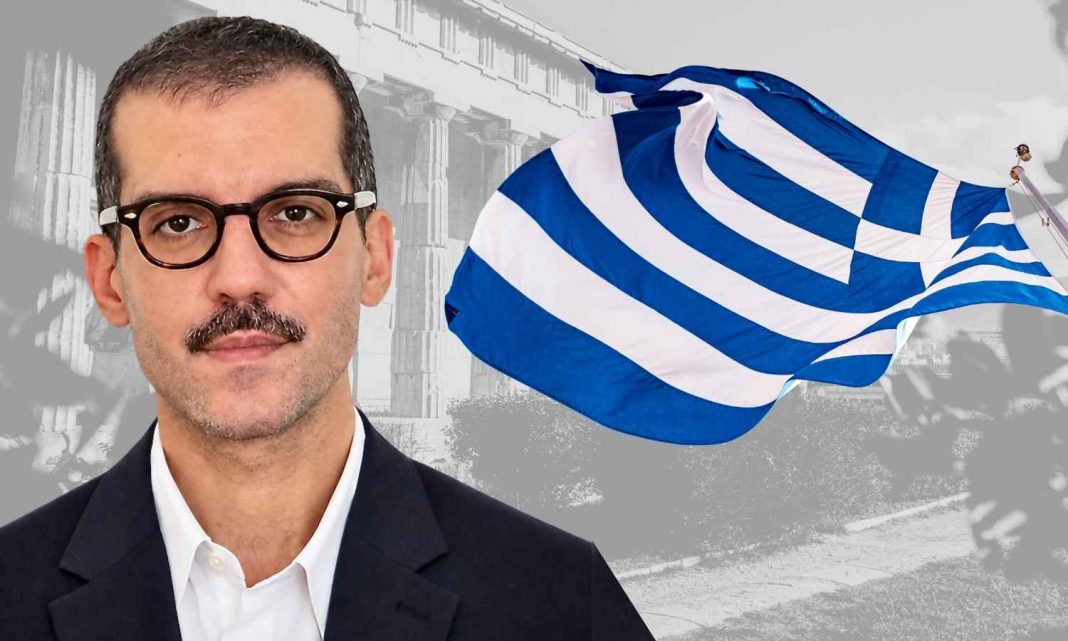
An IMGlobalWealth.news Opinion Feature by Grigoris Gaitanaros
The Greek Golden Visa programme is, in legal and practical terms, structured as an investment scheme: foreign capital enters the country, real estate is acquired and, provided that the legal requirements are met, a residence permit is granted. But after more than a decade of the programme’s operation, its impact cannot be assessed solely by reference to property values, residence permits and capital inflows. There is also a social dimension, less easily measured, but no less relevant when assessing the programme as a whole. This broader assessment is not really a choice; it is rather an acknowledgement that real life does not fit neatly into the categories through which we choose to examine it.
Foreign investors and their families do not necessarily remain detached from the country in which they invest. Some may spend only limited periods of time in Greece, while others gradually establish a more permanent relationship with it. They first interact with Greek professionals and administrative services, then with local communities and, in some cases, through their children, with one of the fundamental institutions of any state: its educational system.


A child who attends a Greek school and grows up alongside Greek classmates may naturally develop a very different relationship with Greece from that of someone who simply owns a property here. For that child, Greece can become the place where important years of life were spent, where friendships were formed, a new, and admittedly difficult, language was learned, and a sense of familiarity and belonging gradually emerged. None of this appears in investment statistics.

Integration, however, is not automatic, and it is certainly not a one-sided process. It depends on the respect foreign residents and investors show towards the local community and towards the standards and ethical practices of the local market, on the way the local population receives them and, most importantly, on the institutional environment created by the state itself.
“In some cases, the answer may simply be a property. In others, investors and their families may develop a longer-term relationship with Greece and its society”
Foreign investors should neither be presented by the state as the saviours of the Greek economy nor treated by the local population as responsible for the country’s structural problems, not least those affecting the domestic housing market. Both approaches simplify a much more complicated reality.

The housing crisis, in particular, cannot reasonably be attributed to a single factor. It is also linked to the limited purchasing power of local households, shaped by low wages and by a considerable tax and social-security burden with limited benefits in return. At the same time, the state itself cannot be left outside this discussion. The adaptation of the Golden Visa legal framework to changing conditions in the real estate market came late. This may have allowed some of the programme’s negative effects to develop further than they otherwise would have.
Earlier legislative intervention, together with shorter transitional periods, could have mitigated at least part of this impact. A regulatory framework of this kind should not merely react to market developments after their consequences have become apparent; as far as possible, it should anticipate them. Investment policy, after all, does not exist in isolation from its social and economic consequences.
Greece occupies a particular geographical and cultural position between East and West. Today, this position is also reflected in its interaction with investors and families coming from different legal, economic and cultural environments. This interaction can create difficulties, but it can also create opportunities for a country increasingly connected to international economic and social developments.
The challenge, therefore, cannot simply be to attract foreign capital. Such a narrow perspective may prove economically and socially damaging in the long term, and it is the long term that ultimately matters. We should also be asking what happens after that capital has entered the country.
Foreign investment should not be viewed solely in terms of the acquisition of an asset and the granting of a residence permit. In some cases, when investors and their families establish their lives in the country, the initial investment may become the starting point of a longer relationship with Greece, its economy and its people.
For this reason, when assessing whether the Golden Visa programme has been successful, the amount of capital attracted can only be part of the answer.

There is another question worth asking: What remains after the investment has been made?
In some cases, the answer may simply be a property. In others, investors and their families may develop a longer-term relationship with Greece and its society. Whether and how that develops is also part of the programme’s broader impact.
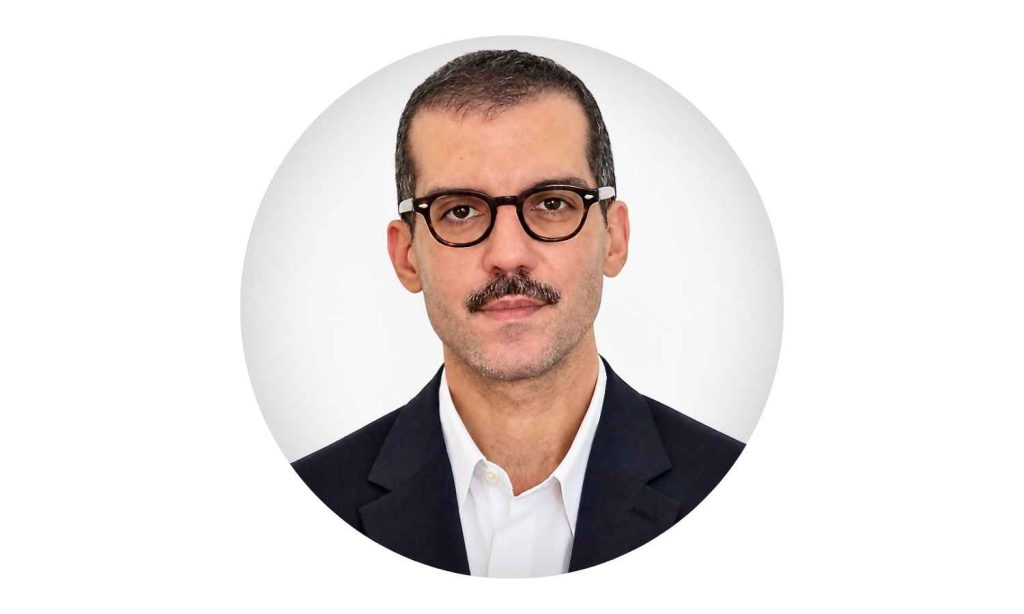
Biography
Grigoris Gaitanaros is a senior Greek-qualified lawyer focusing on real estate and immigration law, advising international investors on property transactions and regulatory matters. He holds an LL.M. in International and European Legal Studies (Private Law and Business Transactions) from the National and Kapodistrian University of Athens and serves on the Editorial Board of the Piraeus Bar Association Magazine.

Interested in Featuring Your Business on our Company Spotlight Pages?
Thank you for your interest in our regular feature articles.
If you would like to have your company highlighted in our weekly spotlight, please do not hesitate to contact IMGW.News. You can reach us via email at [email protected] or by calling 0035699490209. We look forward to showcasing your business and sharing your unique story with our audience.
General Note: Sponsored, Promotional Content
While IMGW.News checks the content provided by its advertisers, we are not responsible for the accuracy of third-party links or their business information as featured in sponsored, promotional content such as the above. Our objective is to provide content that keeps you informed about industry developments and leading companies.

